
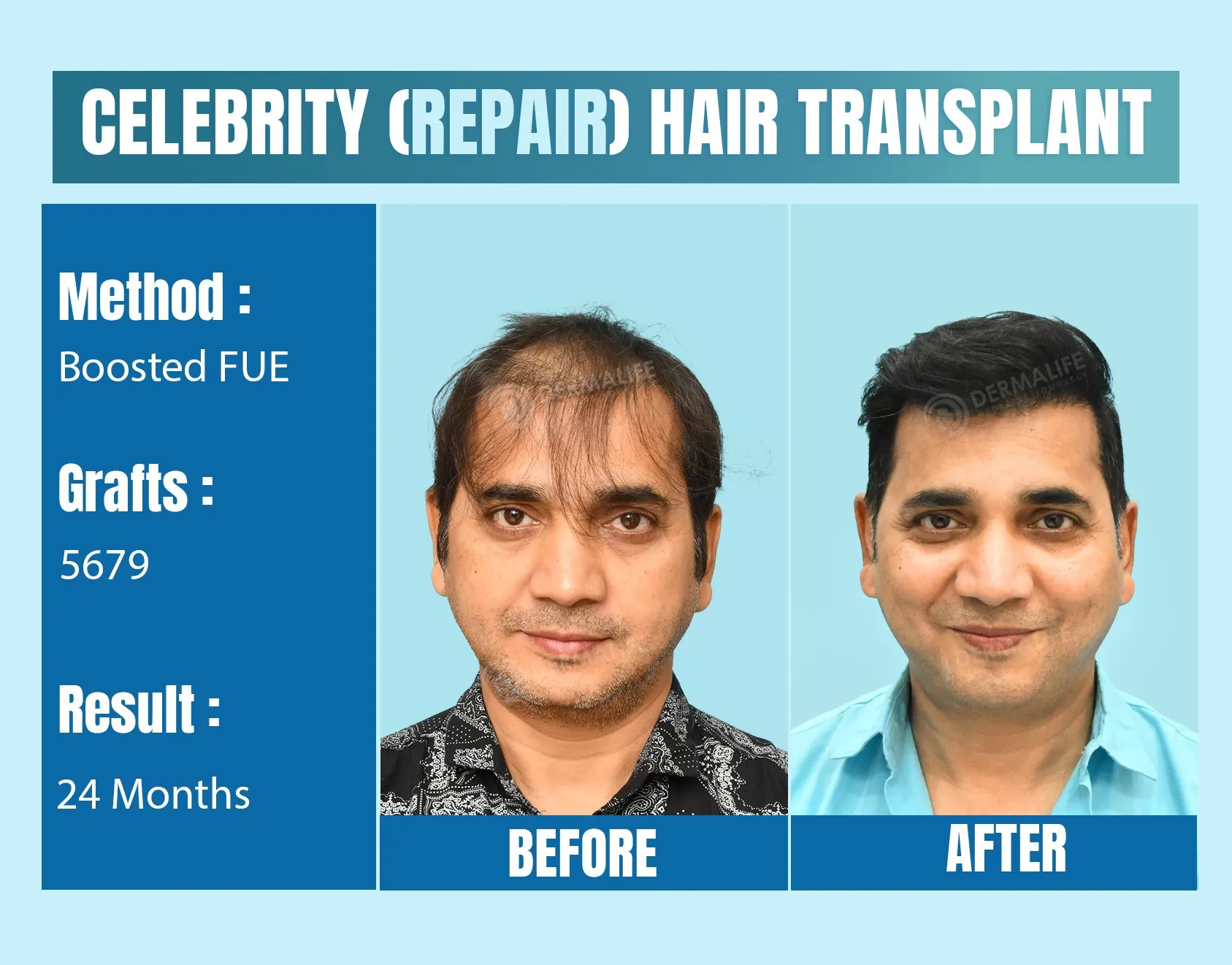
One of the most common questions people ask when considering hair restoration is, “How many grafts do I need for a hair transplant?” The answer depends on several individual factors, including the extent of hair loss, the size of the thinning area, donor hair availability, hair characteristics, and the patient’s desired level of coverage.
Some individuals may need around 1,000 grafts to restore a small receding hairline, while others with extensive baldness may require 4,000 or more grafts over one or multiple procedures. However, the number should never be decided using a standard package or a simple comparison with another patient’s treatment.
Understanding how graft requirements are calculated can help patients develop realistic expectations.
What Is a Hair Graft?
A hair graft, also called a follicular unit, is a naturally occurring group of hair follicles. Each graft generally contains one to four hair follicles, although the exact composition varies.
For example, 2,000 grafts do not necessarily mean 2,000 individual hairs. If the average graft contains two hairs, the procedure may involve approximately 4,000 hair follicles.
This distinction is important when comparing graft estimates and understanding the expected coverage.
1. The Extent of Hair Loss
The most important factor affecting graft requirements is the area that needs restoration.
A patient with mild recession around the temples may require significantly fewer grafts than someone with extensive frontal, mid-scalp, and crown baldness.
Doctors commonly assess hair loss using the Norwood scale in men. This helps describe the pattern and progression of male pattern baldness.
However, two patients with the same Norwood grade may still require different graft counts because their scalp size, hair density, and donor characteristics may differ.
2. The Area to Be Covered
The size of the recipient area plays a major role in calculating the number of grafts.
The frontal hairline, temples, mid-scalp, and crown each have different requirements. For example, the frontal hairline needs careful placement of single-hair grafts to create a soft and natural appearance. The mid-scalp may require a different distribution, while the crown often needs grafts arranged according to the natural hair whorl.
A doctor evaluates the area in square centimetres and estimates the required graft distribution based on the existing hair and desired coverage.
3. Hair Thickness and Characteristics
Hair characteristics can influence the visual density achieved with a particular number of grafts.
Thicker hair shafts generally provide more visual coverage than finer hair. Wavy or curly hair may also create the appearance of greater density compared with straight hair of similar thickness.
Other relevant factors include:
-
Hair colour in relation to scalp colour
-
Hair texture and curl pattern
-
Average number of hairs per graft
-
Existing native hair density
-
Hair direction and growth angle
Therefore, graft requirements cannot be calculated accurately by looking at the bald area alone.
4. Donor Area Density and Availability
The donor area, usually the back and sides of the scalp, supplies the follicular units used in a hair transplant.
A patient with good donor density and suitable hair characteristics may have more options than someone with a weak or limited donor area.
However, donor hair is a finite resource. Excessive extraction can lead to visible thinning in the donor region and reduce the availability of grafts for future procedures.
An experienced surgeon should estimate the safe extraction capacity and plan the procedure according to the patient’s long-term hair restoration needs.
5. Approximate Graft Requirements
The following figures are broad estimates, not fixed treatment recommendations:
|
Hair loss area |
Approximate graft requirement |
|
Mild hairline recession |
800–1,500 |
|
Frontal hairline and temples |
1,500–2,500 |
|
Frontal and mid-scalp |
2,500–3,500 |
|
Extensive frontal and mid-scalp loss |
3,500–4,500 |
|
Advanced baldness involving the crown |
4,000–6,000 or more |
These ranges can overlap considerably. Some patients may need fewer grafts, while others may require staged treatment depending on donor availability and the area being restored.
6. Does the Crown Require More Grafts?
The crown can be particularly challenging because hair grows in a circular whorl pattern. Grafts must be placed at appropriate angles and directions to follow the natural growth pattern.
The crown may also cover a relatively large surface area. As a result, patients with crown baldness sometimes require a substantial number of grafts.
However, the surgeon must balance crown coverage against the need to preserve donor hair for the frontal and mid-scalp regions.
7. Can I Get More Grafts for Better Density?
Not necessarily. A higher graft count does not automatically produce a better result.
The surgeon must consider existing hair, scalp blood supply, donor availability, recipient-area capacity, and the risk of damaging native hair during implantation.
In some cases, distributing grafts strategically across the affected area may provide a more balanced appearance than concentrating too many grafts in one region.
8. Why Is a Professional Assessment Important?
A proper hair transplant consultation includes an examination of the scalp, donor area, hair characteristics, and pattern of hair loss. The doctor may also use magnification or other assessment methods to evaluate follicular density.
At Dermalife Skin & Hair Clinic in South Delhi, Dr. Gaurav Garg evaluates individual hair loss patterns and donor characteristics before recommending a hair transplant plan. The clinic offers FUE and its specialised Boosted FUE approach, along with treatment options for selected repair cases.
A free consultation is available for patients who want to understand their graft requirements and discuss suitable treatment options.
Final Thoughts
There is no universal graft count that works for every hair transplant patient. The required number depends on the size of the recipient area, hair characteristics, donor capacity, existing hair, and long-term treatment goals.
Rather than choosing a clinic based on the highest graft count it promises, patients should look for a surgeon who can explain why a particular number is appropriate and how the donor area will be protected.
A carefully planned hair transplant aims to create natural-looking coverage while preserving valuable donor hair for the future.
